
Last updated: May 2025
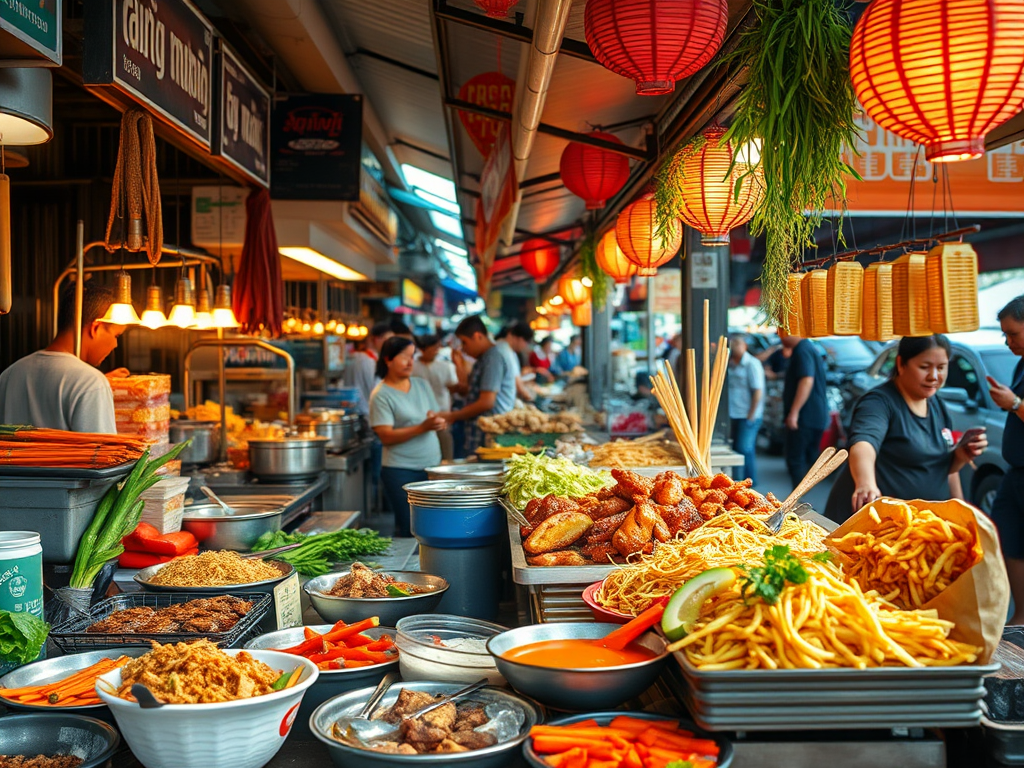
Thai street food is the beating heart of the country’s legendary cuisine—vibrant, affordable, and bursting with flavor. I spent months eating my way through Thailand from Chiang Mai to Bangkok to Phuket. I’ve created this comprehensive guide to help you navigate the bewildering (but rewarding) world of Thai street food. From identifying the most hygienic vendors to ordering like a local, consider this your essential companion for culinary adventures.
Why Street Food Matters in Thailand
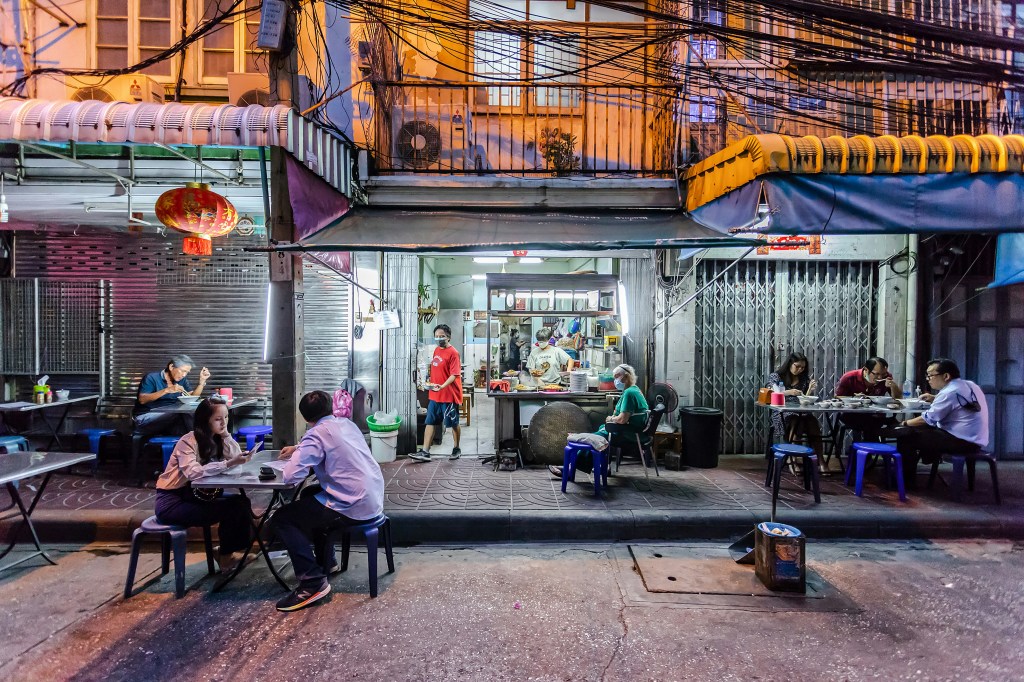
In Thailand, street food isn’t just convenient fast food—it’s a cornerstone of daily life and culture. Many Thais live in homes without full kitchens, making street vendors essential to the food ecosystem. Simple food often represents generations of culinary knowledge. Vendors specialize in a single dish perfected over decades.
Key benefits of exploring street food:
- Authenticity: Many classic Thai dishes originated as street food and taste most authentic in this context
- Affordability: Most dishes cost ฿40-80 ($1-2.50), allowing you to sample widely
- Specialization: Vendors typically perfect one or two dishes rather than offering extensive menus
- Transparency: You can watch your food being prepared (a good food safety indicator)
- Community: Experience how locals eat and socialize
Spotting Safe and Delicious Vendors
While Thai street food is generally safe, using these criteria will help you find the best vendors:
Look For:
- Lines of locals: The most reliable indicator of quality
- High turnover: Fresh ingredients constantly cooking rather than sitting out
- Separate money handling: Ideally someone takes money while another handles food
- Clean workstation: Organized prep area with visible cleaning practices
- Covered food: Ingredients protected from the elements
Specific to Each Type:
- Noodle stalls: Clear broth, fresh garnishes, noodles cooked to order
- Grilled meats: Consistent cooking over even heat, not pre-cooked and reheated
- Somtam (papaya salad): Ingredients being ground to order in a mortar and pestle
Street Food Categories
Thai street food broadly falls into these preparation techniques:
1. Aahaan Jaan Diew (อาหารจานเดียว) – One-Plate Dishes
Finished meals served on a single plate—the backbone of quick street dining.
Essential Dishes:
- Pad Thai (ผัดไทย): The world-famous stir-fried noodle dish with tamarind sauce, tofu, bean sprouts, and peanuts
- Pad See Ew (ผัดซีอิ๊ว): Wide rice noodles stir-fried with soy sauce, egg, and vegetables
- Khao Pad (ข้าวผัด): Thai fried rice with your choice of protein
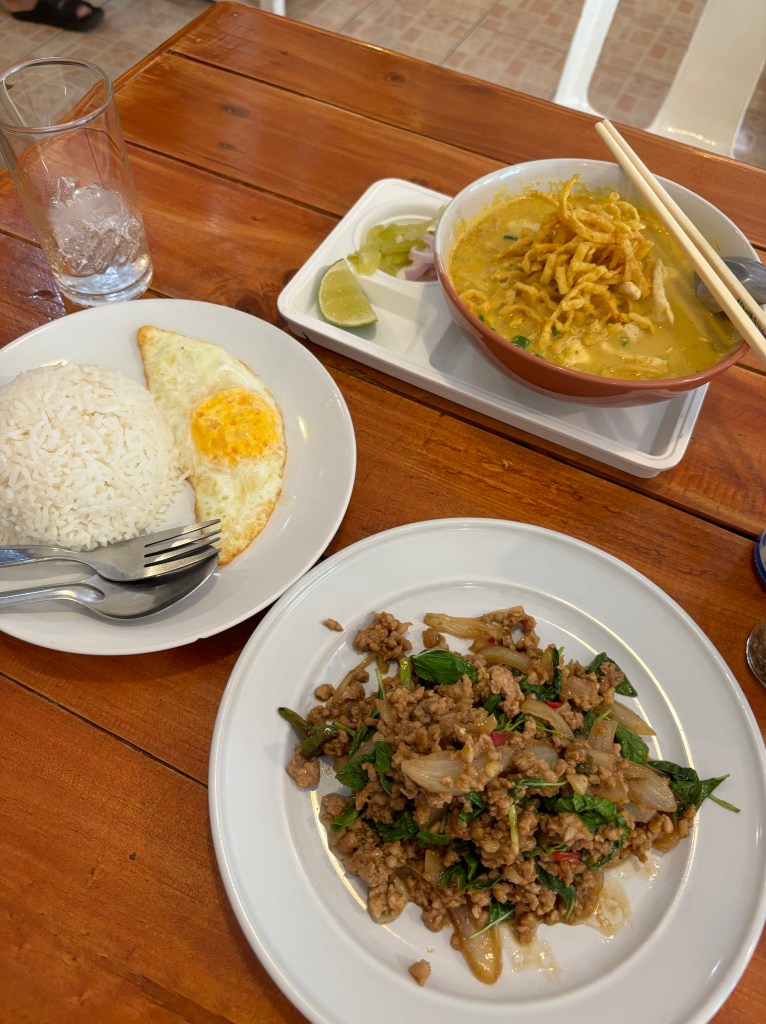
- Pad Krapow (ผัดกระเพรา): Spicy stir-fry with holy basil and minced meat, topped with a fried egg
2. Kaap Klaem (กับแกล้ม) – Snacks and Small Bites
Perfect for grazing through markets or accompanying drinks.
Essential Dishes:
- Moo Ping (หมูปิ้ง): Skewers of marinated grilled pork
- Sai Krok Isan (ไส้กรอกอีสาน): Fermented Isaan-style sausage
- Tod Mun (ทอดมัน): Fried fish cakes with kaffir lime leaves
- Khao Niew Ping (ข้าวเหนียวปิ้ง): Grilled sticky rice stuffed with banana or taro
3. Kuay Tiew (ก๋วยเตี๋ยว) – Noodle Soups
Perhaps the most common street food category, with endless regional variations.
Essential Dishes:
- Kuay Tiew Moo/Neua (ก๋วยเตี๋ยวหมู/เนื้อ): Pork or beef noodle soup with various toppings
- Yen Ta Fo (เย็นตาโฟ): Pink seafood noodle soup with a slightly sweet-sour flavor
- Ba Mee (บะหมี่): Egg wheat noodles typically served with wonton dumplings or barbecued pork
- Khao Soi (ข้าวซอย): Northern Thai curry noodle soup topped with crispy noodles
- Tom Yum Noodles (ก๋วยเตี๋ยวต้มยำ): Noodles in spicy and sour tom yum broth

4. Som Tam (ส้มตำ) – Papaya Salads
These pounded salads originate from Northeastern Thailand (Isaan) but are now found nationwide.
Essential Variations:
- Som Tam Thai (ส้มตำไทย): The classic version with peanuts and dried shrimp
- Som Tam Poo (ส้มตำปู): With pickled crab
- Som Tam Ponlamai (ส้มตำผลไม้): With mixed fruit instead of papaya
- Tam Sua (ตำซั่ว): With rice vermicelli added
5. Kanom (ขนม) – Sweet Snacks & Desserts
Thai street desserts emphasize textures and natural sweetness from coconut, rice, and fruits.
Essential Dishes:
- Khanom Krok (ขนมครก): Coconut pudding cups cooked in special dimpled pans
- Roti (โรตี): Thai-style crispy pancakes with condensed milk, sugar, and banana
- Khao Niew Mamuang (ข้าวเหนียวมะม่วง): Mango with sticky rice and coconut cream
- Khanom Buang (ขนมเบื้อง): Crispy crepes with sweet or savory fillings
Regional Street Food Specialties
One of Thailand’s culinary joys is how dramatically the food changes as you travel through different regions:
Northern Thailand
Northern cuisine features milder flavors, sticky rice, and influence from neighboring Burma/Myanmar and Laos.
Street Food Specialties:
- Sai Oua (ไส้อั่ว): Herb-packed northern Thai sausage
- Khao Soi (ข้าวซอย): Curry noodle soup with crispy noodle topping
- Nam Ngiao (น้ำเงี้ยว): Spicy tomato-based rice noodle soup with cotton flowers
- Khanom Jeen Nam Ngiaw (ขนมจีนน้ำเงี้ยว): Fermented rice noodles with spicy pork-tomato sauce
Northeastern Thailand (Isaan)
Isaan cuisine is known for intense flavors—spicy, sour, and salty—with minimal sweetness and heavy use of fermentation.
Street Food Specialties:
- Gai Yang (ไก่ย่าง): Marinated grilled chicken
- Som Tam (ส้มตำ): Spicy green papaya salad in countless variations
- Larb (ลาบ): Minced meat salad with herbs, lime, and toasted rice powder
- Moo Dat Diew (หมูแดดเดียว): Sun-dried pork jerky, briefly fried before serving
Central Thailand (Bangkok)
Central Thai cuisine forms the basis of what most Westerners know as “Thai food.” It balances sweet, sour, salty, and spicy elements.
Street Food Specialties:
- Pad Thai (ผัดไทย): The famous stir-fried noodle dish
- Tom Yum (ต้มยำ): Spicy and sour soup, often served with noodles on the street
- Hoy Tod (หอยทอด): Crispy mussel or oyster omelette
- Guay Tiew Reua (ก๋วยเตี๋ยวเรือ): “Boat noodles” with rich, spiced broth
Southern Thailand
Southern Thai cuisine is the spiciest of all regions, with heavy use of seafood, coconut, and turmeric.
Street Food Specialties:
- Khua Kling (คั่วกลิ้ง): Dry-fried minced meat with fiery southern curry paste
- Kanom Jeen Nam Ya (ขนมจีนน้ำยา): Fermented rice noodles with fish curry
- Moo Hong (หมูฮ้อง): Five-spice stewed pork belly (Chinese influence
- Roti Gluay (โรตีกล้วย): Roti with banana, popular for breakfast
How to Order Street Food Like a Local
Essential Thai Phrases
- “Aroy” (อร่อย) = Delicious
- “Mai phet” (ไม่เผ็ด) = Not spicy
- “Phet noi” (เผ็ดน้อย) = A little spicy
- “Phet mak” (เผ็ดมาก) = Very spicy
- “Mai sai prik” (ไม่ใส่พริก) = No chilies
- “Mai sai nam tan” (ไม่ใส่น้ำตาล) = No sugar
- “Mai sai MSG” (ไม่ใส่ผงชูรส) = No MSG
- “Ao nee” (เอานี่) = I’ll have this (pointing)
- “Tao rai” (เท่าไร) = How much?
- “Khob khun” (ขอบคุณ) = Thank you
Condiment Caddy Mastery
Almost every Thai street food stall provides a condiment caddy for customizing your dish. Learning to use these is key to eating like a local:
- Nam Pla Prik (fish sauce with chilies): Adds saltiness and heat
- Nam Som (vinegar): Often infused with chilies for sour spiciness
- Nam Tan (sugar): Balances other strong flavors
- Prik Bon (dried chili powder): For adding heat without liquid
- Prik Dong (pickled chilies): Adds both heat and tanginess
Local Secret: The proper technique is to taste your food first, then adjust gradually. Thais consider this customization essential to the dining experience, not an insult to the cook.
Street Food Culture and Etiquette
Unspoken Rules
- Small Portions: Order one dish at a time rather than multiple dishes simultaneously
- Shared Tables: Be prepared to sit with strangers during busy periods
- Quick Turnover: Eat efficiently and move on during peak hours
- Payment: Pay when the food is served or immediately after eating
Eating Tools
- Most noodle dishes come with a spoon and chopsticks (not fork)
- Rice dishes typically use a spoon and fork (spoon is the primary eating utensil)
- Sticky rice is eaten with your fingers to grab and dip (so bring your hand sanitizer!)
- Tissues or napkins are rarely provided; carry your own
Street Food for Dietary Restrictions
Vegetarian/Vegan
The concept of “jay” (เจ) food (vegan Buddhist style) is well understood in Thailand:
- Look for yellow signs with red text indicating jay vendors
- Learn to say “gin jay” (กินเจ) – I eat vegan food
- Beware of hidden fish sauce (nam pla) and oyster sauce
- Morning markets and areas near Chinese temples offer more vegetarian options
Gluten-Free
Thailand is relatively gluten-free friendly:
- Rice noodles (not yellow egg noodles) are naturally gluten-free
- Soy sauce contains wheat – ask for “mai sai see-yu”
- Most curries and stir-fries are naturally gluten-free
- Sticky rice is a safe alternative to wheat products
Street Food Walking Tours
For first-timers, a guided food tour can be invaluable. There are tours in almost every city across Thailand. These tours are a fantastic introduction to the cuisine. They show where it is best to eat and highlight any local delicacies. Group sizes will vary. These tours can usually be customized to some extent. This is helpful if there is a dish that you really want to see or try.
Expect to pay ฿1,000-2,000 for a good tour, which typically includes 6-8 food stops plus cultural context.
Final Thoughts
Thai street food symbolizes one of the world’s great culinary traditions—democratic, affordable, and bursting with flavor. Beyond just feeding the population, it preserves cooking techniques and recipes that might otherwise be lost to history.
The best approach as a visitor is to start with familiar dishes. Then gradually explore more adventurous options as your palate adjusts. Remember that most vendors specialize in just one or two dishes, perfected over years or even generations. That unassuming cart might just serve the best meal of your trip.
Don’t be intimidated by language barriers—a smile, pointing, and basic food vocabulary will get you far. When you find something you love, return to the same vendor repeatedly. You’ll be rewarded with recognition and maybe larger portions. Enjoy the satisfaction of becoming a regular in Thailand’s vibrant street food community.
What’s your favorite Thai street food discovery? Share your finds and tips in the comments below!
 Wander with Orla